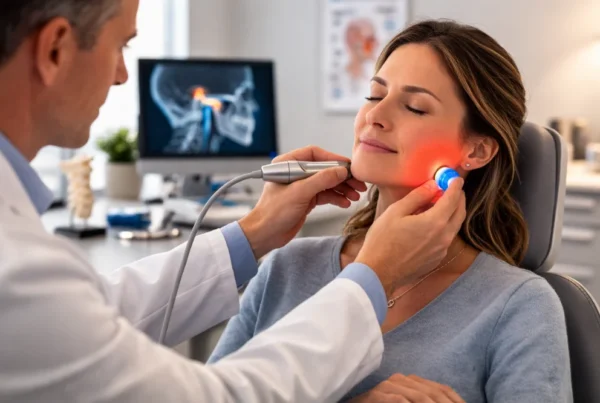

Sleep apnea and TMJ (temporomandibular joint) problems often happen together, and understanding this connection can help you get better treatment for both conditions. When you have sleep apnea, your breathing stops and starts during sleep, which can cause your body to tense up and affect your jaw muscles. At the same time, TMJ problems can change how your jaw sits and potentially make breathing difficulties worse during sleep, creating a cycle where each condition makes the other one worse.
Dr. Bethaney Brenner in Burlington, Connecticut has over 40 years of experience helping patients understand complex health connections like the relationship between sleep disorders and jaw problems. As a graduate of the University of Connecticut School of Dental Medicine with additional training in advanced techniques, she recognizes how sleep quality affects overall dental health and jaw function. Her certification in DTR therapy specifically addresses facial pain and jaw dysfunction, making her uniquely qualified to treat patients who have both sleep apnea and TMJ issues.
What makes this connection so important is that treating just one condition without addressing the other often leads to incomplete relief and ongoing problems. Dr. Brenner’s holistic health background and recognition as one of America’s Best Dentists comes from her ability to see the bigger picture and address multiple factors that affect patient health. When both sleep apnea and TMJ are properly diagnosed and treated together, patients often experience much better results than when each condition is treated separately.
Understanding How These Conditions Affect Each Other
Sleep apnea and TMJ create a complex relationship where each condition can make the other worse, leading to a cycle of problems that affects both your sleep quality and jaw comfort. When you have sleep apnea, your brain repeatedly wakes you up slightly throughout the night to restart your breathing, which prevents you from getting the deep, restful sleep your muscles need to relax and recover properly.
This poor sleep quality can increase muscle tension throughout your body, including the muscles that control your jaw, making TMJ pain and dysfunction worse. People with untreated sleep apnea often wake up with sore jaws, headaches, or facial pain because their muscles have been tense all night while their body struggled with breathing interruptions.
On the flip side, TMJ problems can affect the position of your jaw and tongue, potentially making your airway smaller or less stable during sleep, which can worsen sleep apnea symptoms. When your jaw doesn’t align properly or your jaw muscles are chronically tight, it can change how your tongue rests and affect the space available for breathing while you sleep.
Recognizing the Signs You Might Have Both
Many symptoms of sleep apnea and TMJ overlap, which can make it challenging to identify both conditions, but recognizing these shared symptoms is important for getting comprehensive treatment. Understanding which symptoms might indicate both conditions helps you communicate more effectively with healthcare providers and ensures that both problems are properly evaluated.
Morning headaches are common in both sleep apnea and TMJ because poor sleep quality and muscle tension both contribute to head and neck pain. If you regularly wake up with headaches, especially if they’re worse in the morning and gradually improve throughout the day, this could indicate either or both conditions.
Fatigue and daytime sleepiness can result from both the poor sleep quality caused by sleep apnea and the chronic pain and muscle tension associated with TMJ disorders. When your body is fighting both breathing problems at night and jaw pain during the day, exhaustion becomes a significant problem.
Jaw pain and facial discomfort can be directly related to TMJ or can result from the muscle tension and teeth grinding that often accompany sleep apnea. Here are important symptoms that might indicate both conditions:
- Morning jaw soreness or stiffness that improves during the day
- Frequent headaches, especially upon waking
- Chronic fatigue despite spending adequate time in bed
- Teeth grinding or clenching, particularly during sleep
- Difficulty concentrating during the day
Dr. Brenner’s extensive experience since 1980 has shown her how these overlapping symptoms can confuse diagnosis and why comprehensive evaluation is essential for effective treatment.
The Importance of Comprehensive Evaluation
Getting proper diagnosis and treatment for both sleep apnea and TMJ requires healthcare providers who understand the connection between these conditions and can evaluate both simultaneously. Dr. Brenner’s training in multiple specialties, including her DTR certification for treating facial pain and jaw dysfunction, allows her to assess how these conditions interact in individual patients.
A comprehensive evaluation includes assessment of your sleep quality, breathing patterns, jaw function, bite alignment, and muscle tension to identify all factors contributing to your symptoms. This thorough approach helps ensure that treatment addresses the root causes of both conditions rather than just managing individual symptoms.
Advanced diagnostic tools and techniques can reveal connections between sleep apnea and TMJ that might not be obvious during a basic examination, helping healthcare providers develop more effective treatment strategies that address both conditions simultaneously.

Breaking the Cycle with Integrated Treatment
Successful treatment of coexisting sleep apnea and TMJ often requires coordinated care that addresses the ways these conditions reinforce each other. Dr. Brenner’s holistic health background and comprehensive dental training allow her to develop treatment plans that consider how improving one condition can positively affect the other.
Addressing muscle tension that affects both conditions can involve techniques like DTR therapy to reduce facial pain and jaw dysfunction while also potentially improving airway stability during sleep. When jaw muscles are more relaxed and properly aligned, both TMJ symptoms and sleep breathing can improve.
Timing of treatments and interventions can be strategically planned to maximize the benefits for both conditions, such as using oral appliances that help with sleep apnea while also addressing TMJ alignment issues, or coordinating TMJ treatment with sleep apnea therapy for optimal results.
Lifestyle Changes That Help Both Conditions
Many lifestyle modifications can improve both sleep apnea and TMJ symptoms simultaneously, making these changes an important part of comprehensive treatment. Understanding how daily habits affect both conditions helps you make choices that support your overall health and symptom management.
Stress management is crucial for both conditions because chronic stress contributes to muscle tension that worsens TMJ symptoms and can also affect sleep quality and breathing patterns. Learning effective stress reduction techniques benefits both your jaw health and your sleep quality.
Sleep position and sleep environment modifications can help reduce both sleep apnea episodes and TMJ-related morning symptoms. Proper pillow support and sleeping position can help keep airways open while also reducing strain on jaw muscles during sleep.
Weight management, when appropriate, can significantly improve sleep apnea symptoms while also reducing inflammation that contributes to TMJ pain and dysfunction.
Creating Your Treatment Plan
Developing an effective treatment plan for both sleep apnea and TMJ requires collaboration between you and healthcare providers who understand both conditions and how they interact. Dr. Brenner’s role as Treasurer on the Connecticut State Dental Association Board of Governors ensures she stays current with the latest advances in treating complex conditions that cross multiple specialties.
Integrated care approaches consider how treatments for one condition might affect the other, allowing for coordination of therapies that work together rather than potentially conflicting with each other. This might include oral appliances designed to address both sleep breathing and jaw alignment, or timing treatments to maximize benefits for both conditions.
Patient education about the connection between these conditions helps you understand why certain treatments are recommended and how you can participate actively in your recovery by making lifestyle choices that support both your sleep quality and jaw health.
Your Path to Better Sleep and Jaw Health
Understanding the connection between sleep apnea and TMJ empowers you to seek comprehensive care that addresses both conditions effectively rather than treating them as separate, unrelated problems. When these conditions are properly evaluated and treated together, patients often experience more complete relief and better long-term outcomes. Dr. Brenner’s 40+ years of experience, specialized training, and holistic approach provide the expertise needed to address complex interactions between sleep disorders and jaw dysfunction.
The relationship between sleep quality and jaw health means that improving one area often leads to improvements in the other, creating a positive cycle of healing rather than the negative cycle that occurs when both conditions go untreated. Professional guidance helps ensure that treatments are coordinated effectively and that lifestyle modifications support both conditions.
With proper diagnosis, appropriate treatment, and understanding of how these conditions interact, most people can achieve significant improvement in both their sleep quality and jaw comfort. Dr. Brenner’s comprehensive approach ensures that patients receive care that addresses all aspects of their health for optimal results and long-term wellness.
Book Your Consultation Today!
Dr. Bethaney B. Brenner DMD
8 Milford St, Burlington, CT 06013
Frequently Asked Questions
How are sleep apnea and TMJ connected?
Sleep apnea and TMJ often influence each other through shared factors like jaw position, muscle tension, and airway stability. Poor sleep from apnea can increase jaw muscle tension and TMJ pain, while TMJ problems can affect jaw and tongue position in ways that may worsen breathing during sleep.
Can TMJ make sleep apnea worse?
Yes, TMJ can potentially worsen sleep apnea by affecting jaw alignment and tongue position, which can reduce airway space during sleep. Additionally, TMJ-related pain and muscle tension can interfere with sleep quality, making it harder to get restorative sleep even when breathing problems are addressed.
Should both conditions be treated at the same time?
Treating both conditions together often produces better results than addressing them separately because they can influence each other. Coordinated treatment can address underlying causes more effectively and prevent one condition from undermining treatment of the other, leading to more complete symptom relief.