Jaw pain, clicking, or headaches around the temples can feel confusing. Many people say they “have TMJ,” yet they are not sure what that really means. TMJ disorder causes usually involve several factors such as grinding, arthritis, injury, stress, or bite changes. The good news is that most jaw problems improve when the real cause is identified early and treated conservatively.
Dr. Bethaney B. Brenner DMD has cared for patients in Burlington, Connecticut since 1980. She graduated from the University of Connecticut School of Dental Medicine in 1979 and has spent decades helping patients understand jaw pain and bite function. Her training includes orthodontics, endodontics, implants, laser dentistry, and facial pain therapy. Dr. Brenner is active in organizations such as the American Dental Association and the Connecticut State Dental Association. Patients from Town Center, West Burlington, and the Farmington River Valley often visit her practice when jaw discomfort begins to affect everyday life.
TMJ vs TMD: What People Really Mean
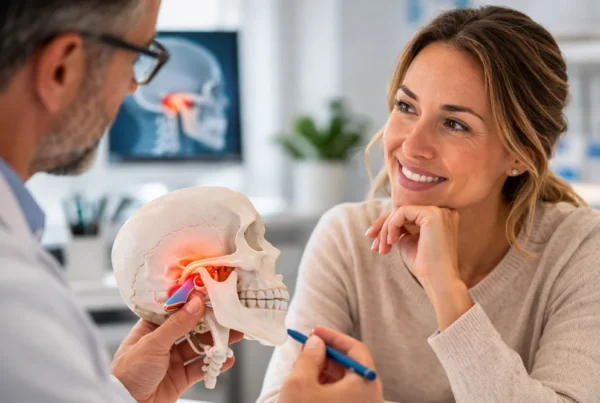
Many people say they have TMJ when their jaw hurts. In reality, everyone has a temporomandibular joint. The TMJ is the small joint located just in front of each ear. It connects your lower jaw to the skull and allows you to open and close your mouth.
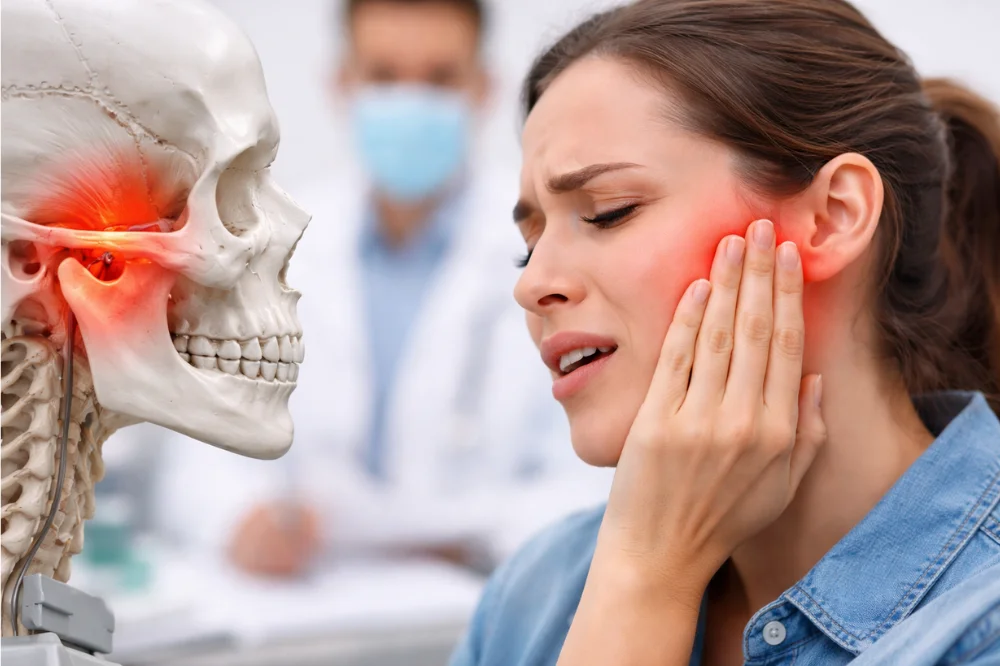
The condition that causes pain is called temporomandibular disorder, often shortened to TMD. TMD describes problems involving the jaw joint, the disc inside the joint, or the muscles that control chewing. Some people feel pain in the joint itself, while others feel soreness in the muscles of the cheeks or temples.
Small clicking sounds without pain are common and often harmless. Many healthy joints make occasional noises during movement. Pain, locking, or difficulty opening the mouth usually signals that the joint deserves closer evaluation.
How the Jaw Joint Works
The temporomandibular joint works like a hinge and a sliding track combined. The hinge motion lets the mouth open and close. The sliding motion lets the jaw move forward and side to side while chewing.
Inside the joint sits a small cartilage disc that acts as a cushion. This disc helps the bones move smoothly against each other. Ligaments keep the disc in place, and muscles such as the masseter and temporalis provide strength for chewing.
When the disc stays centered and the muscles stay relaxed, the jaw moves smoothly. Problems can begin if the disc shifts, cartilage wears down, or muscles tighten from clenching. Understanding this structure helps explain many TMJ disorder causes.
Common TMJ Disorder Symptoms
Jaw discomfort often starts gradually and can feel different from person to person. Some people first notice soreness in the morning, while others notice clicking when chewing or speaking. When these symptoms repeat or become painful, they may signal a temporomandibular disorder.
- Jaw pain or tenderness near the ears
- Clicking or popping when opening the mouth
- Headaches around the temples
- Difficulty opening the mouth fully
- Jaw locking open or closed
- Facial pain when chewing
These symptoms do not always mean something serious is happening inside the joint. Many jaw issues improve with conservative care and simple habit changes. However, persistent pain or difficulty moving the jaw deserves a closer look so the cause can be identified.
Major Causes of TMJ Disorders
TMJ disorder causes rarely come from a single issue. Most cases develop when several factors stress the joint and muscles over time. Grinding and clenching, known as bruxism, are among the most common triggers.
Nighttime grinding places repeated pressure on the joint and surrounding muscles. Over time this pressure can irritate the cartilage disc and create muscle fatigue. Patients often notice morning jaw soreness or headaches.
Other causes include jaw injuries, arthritis that affects joint cartilage, and bite changes from missing or shifting teeth. Stress can also increase muscle tension and clenching habits. Many patients experience a combination of these influences rather than one single cause.
Muscle Based vs Joint Based TMJ Problems
Some TMJ disorders involve mainly the chewing muscles. Others involve structural changes inside the joint itself. Understanding the difference helps guide treatment decisions and expectations.
| Type of Problem | Typical Symptoms | Common Triggers | Typical Approach |
| Muscle related TMD | Facial soreness, headaches, jaw fatigue | Grinding, clenching, stress | Night guards and muscle relaxation |
| Joint related TMD | Clicking, locking, limited opening | Disc movement, arthritis, injury | Evaluation and conservative care |
| Mixed cases | Pain with stiffness or popping | Multiple contributing factors | Coordinated treatment approach |
This comparison shows why evaluation matters. Two patients may describe the same symptoms while having very different underlying causes. A careful exam helps determine which structures need attention.
Other Contributing Factors
The jaw joint does not work alone. Stress often increases muscle tension around the face and neck. Tight muscles can trigger headaches or facial soreness.
Posture can also influence jaw comfort. Forward head posture during computer or phone use strains neck and jaw muscles. This strain may create trigger points that refer pain into the jaw.
Pain sensitivity also varies from person to person. Some individuals develop strong symptoms from mild joint stress. Others experience similar habits with little discomfort. This variation explains why TMJ disorder causes are often multifactorial.
How a Burlington Dentist Evaluates TMJ Disorders
A dental evaluation can reveal important clues about jaw pain and joint function. The process focuses on understanding symptoms, identifying contributing habits, and examining how the jaw joint moves during everyday activities. This careful evaluation helps determine whether the problem is related to the joint, the muscles, or both.
- Review of health history and jaw symptoms
- Questions about grinding, clenching, stress, or injury
- Gentle examination of jaw muscles and joint movement
- Checking bite alignment and signs of tooth wear
- Measuring how far the mouth opens and how the jaw moves
This type of evaluation helps identify patterns that may be stressing the jaw joint. In some cases imaging may be recommended to view the joint structure more clearly. Most patients begin with conservative care such as education, bite guards, or habit adjustments before more advanced treatments are considered.
When to Seek Help for Jaw Pain
Jaw discomfort that lasts longer than two weeks deserves attention. Difficulty chewing or opening the mouth fully also signals that evaluation may help. Sudden locking or injury to the jaw should be examined promptly.
Residents near Wildcat Road, Lost Acres, and the Farmington River Valley often appreciate having a local provider who can monitor symptoms over time. Follow up visits help track improvement and adjust care when needed.
Seeking evaluation does not mean aggressive treatment will follow. Most TMJ conditions respond well to conservative care. Early evaluation simply helps protect the joint and prevent symptoms from worsening.
A Clear Path Toward Jaw Pain Relief
Jaw pain can make simple activities uncomfortable. Eating, speaking, and even sleeping may become frustrating. Many people wait months before asking questions because the symptoms seem confusing.
Dr. Bethaney B. Brenner DMD helps patients in Burlington understand the real story behind jaw pain. Her approach focuses on listening, careful evaluation, and conservative solutions that protect the jaw joint. If jaw clicking, headaches, or locking continue, scheduling an evaluation can help you move toward relief with confidence.
Frequently Asked Questions
What is TMJ disorder?
Many patients hear the term TMJ and assume it is the name of the condition causing their jaw pain. The reason this question matters is that misunderstanding the terminology often leads people to ignore symptoms or delay care. A more helpful way to think about it is to ask what problem may be affecting the temporomandibular joint and the muscles around it. TMJ disorder, more accurately called temporomandibular disorder or TMD, describes conditions that affect the jaw joint, the cartilage disc inside the joint, or the muscles that control jaw movement. These issues may cause pain, clicking, headaches, or difficulty opening the mouth. When symptoms persist, a dental evaluation can help determine whether the discomfort comes from muscle tension, joint irritation, or a combination of factors.
What causes TMJ pain?
People often search for a single clear cause of TMJ pain, but the reality is more complex. This question matters because many patients blame one factor when several influences are usually involved. A better question to ask is what habits or conditions may be placing stress on the jaw joint over time. TMJ pain commonly develops from a combination of grinding or clenching, joint strain, arthritis, injury, bite changes, or stress related muscle tension. Nighttime grinding places repeated pressure on the joint and surrounding muscles, which can irritate the cartilage disc and create inflammation. When these factors combine, symptoms such as soreness, headaches, or stiffness may appear. Identifying these contributing habits helps guide conservative treatment and protect the joint.
When should I see a dentist for jaw pain?
Many people try to wait out jaw discomfort because they assume it will resolve on its own. The reason this question matters is that persistent symptoms can gradually worsen if the underlying cause is not identified. A more useful question to ask is which symptoms signal that professional evaluation would be helpful. Jaw pain lasting longer than two weeks, frequent headaches near the temples, difficulty chewing, or a jaw that locks or feels unstable should be evaluated. During a dental visit the dentist can examine jaw movement, check the muscles, and assess bite alignment to determine what may be causing the discomfort. Early evaluation often allows simple conservative treatments to relieve symptoms before the joint becomes more irritated.
Is jaw clicking always a problem?
Jaw clicking can sound alarming, which is why many patients worry when they first notice it. The reason this question matters is that clicking alone does not always mean the joint is damaged. A better question to ask is whether the clicking occurs with pain or limited movement. Many people experience occasional popping or clicking without any discomfort, which can simply reflect the way the disc moves inside the joint. However, clicking that occurs together with pain, stiffness, or jaw locking may indicate irritation of the joint or muscles. When these symptoms appear together, a dental evaluation can help determine whether the joint disc or surrounding muscles need attention.