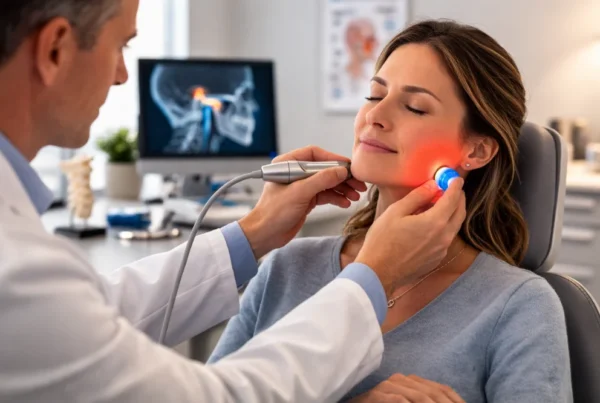

Jaw pain, clicking when you chew, or headaches near your temples can leave you wondering what is going on. Many people assume these symptoms come from stress or poor sleep. Sometimes that is true, but they can also be signs of a temporomandibular disorder. TMJ disorders affect the jaw joint and the muscles that control chewing, and they can show up as pain, stiffness, headaches, or difficulty opening the mouth.
Dr. Bethaney B. Brenner DMD has helped Burlington, Connecticut patients understand jaw pain and bite problems since 1980. She graduated from the University of Connecticut School of Dental Medicine and has spent decades studying how the teeth, jaw joints, and chewing muscles work together. Her training includes orthodontics, implants, laser dentistry, and facial pain therapy. Patients from Town Center, West Burlington, and the Farmington River Valley often visit her office when jaw discomfort begins interfering with everyday activities.
TMJ Disorder in One Minute: What It Is and Where Symptoms Show Up
The temporomandibular joint sits just in front of your ears on both sides of your head. This joint connects the lower jaw to the skull and allows the mouth to open, close, and move from side to side. Every time you chew, speak, or yawn, the temporomandibular joint is working.
A temporomandibular disorder, often shortened to TMD, occurs when the joint or the surrounding muscles become irritated or strained. Symptoms may appear directly in the jaw joint, but they can also spread to nearby areas such as the temples, ears, neck, or shoulders. Many patients do not realize that headaches or ear discomfort can be related to the jaw.
Core Jaw and Bite Symptoms of TMJ Disorder
Most people first notice symptoms in the jaw itself. These are the signs dentists commonly evaluate because they involve the joint or the muscles that move the jaw. When these symptoms appear repeatedly, they often signal that the joint is under stress.
- Jaw pain or tenderness, especially while chewing or speaking
- Pain in one or both jaw joints, usually felt near the ears
- Clicking, popping, or grinding sounds during jaw movement
- Difficulty opening or closing the mouth fully
- Jaw stiffness or brief episodes where the jaw locks
Occasional clicking without pain can be normal for many people. However, clicking that happens frequently or is accompanied by pain should not be ignored. When pain and movement changes appear together, the joint usually needs a closer evaluation.
Headaches, Ear Symptoms, and Facial Pain Linked to TMJ
Not every TMJ symptom feels like it is coming from the jaw. Some people notice headaches or ear discomfort first and assume the problem is unrelated. The nerves and muscles around the temporomandibular joint connect to several nearby areas, which allows pain to travel.
Patients often describe headaches around the temples or behind the eyes. These headaches may appear in the morning or after chewing for long periods. Earaches, ringing in the ears, or a feeling of fullness in the ear can also appear even when there is no infection.
Facial soreness, neck tension, and shoulder discomfort may develop as well. In some cases teeth become sensitive even though there is no cavity or dental disease present. When several of these symptoms appear together, the jaw joint and chewing muscles are often involved.
Early TMJ Warning Signs Many People Overlook
TMJ disorders often begin with small symptoms that seem easy to ignore. Many patients describe mild jaw fatigue or soreness that appears in the morning. At first these signs may disappear quickly, which makes them seem unimportant.
- Jaw stiffness or fatigue when waking up
- Grinding sounds during sleep noticed by a partner
- Discomfort when chewing tough foods or gum
- Teeth that appear worn, flattened, or sensitive
These early symptoms often appear in people who clench or grind their teeth. Dentists call this habit bruxism. Addressing these early warning signs can prevent the joint and muscles from becoming more irritated later.
Muscle Based vs Joint Based TMJ Problems
Some TMJ disorders are caused mainly by muscle tension. Others involve structural changes inside the joint itself. Understanding this difference helps dentists determine which treatments are most appropriate.
| Type of Problem | Typical Symptoms | Common Triggers | Typical Approach |
| Muscle related TMD | Facial soreness, headaches, jaw fatigue | Grinding, clenching, stress | Night guards and muscle relaxation |
| Joint related TMD | Clicking, locking, limited opening | Disc movement, arthritis, injury | Evaluation and conservative care |
| Mixed cases | Pain with stiffness or popping | Multiple contributing factors | Coordinated treatment approach |
Two patients can describe very similar symptoms while having completely different causes. One person may have tight chewing muscles from grinding, while another may have a disc inside the joint that shifts during movement. A careful exam helps identify which structures are involved.
Red Flag TMJ Symptoms: When to Seek Help Quickly
Some TMJ symptoms should not be ignored because they can signal that the jaw joint or surrounding tissues are under significant stress. One of the clearest warning signs is jaw locking. Some patients describe moments when the jaw feels stuck or difficult to move, while others notice that their teeth suddenly fit together differently when they bite.
Severe or worsening pain around the jaw, face, or ear also deserves prompt attention. Symptoms that appear after a fall, sports injury, or car accident should always be evaluated to rule out structural damage. Persistent locking, major bite changes, or pain that interferes with chewing are strong reasons to contact a dentist for an evaluation.
How a Burlington, CT Dentist Evaluates TMJ Symptoms
When a patient visits the dental office with jaw pain, the first step is usually a conversation about the symptoms. The dentist asks when the pain began, what activities make it worse, and whether clenching or grinding may be involved.
The dentist may also examine the jaw muscles, listen for joint sounds, and observe how the jaw opens and closes. Bite alignment and tooth wear provide additional clues about grinding or clenching habits.
In some situations imaging may be recommended to examine the joint structure. Many TMJ symptoms respond well to conservative care such as night guards, posture improvements, and small habit changes that reduce pressure on the joint.
A Clear Path Toward Understanding Jaw Pain
TMJ symptoms often begin with small signals such as clicking, jaw fatigue, or headaches. Over time these signals can become more noticeable if the joint or surrounding muscles remain irritated. Recognizing these patterns early helps patients understand when it may be time to ask questions and seek guidance.
Dr. Bethaney B. Brenner DMD helps Burlington patients connect those symptoms to what is happening inside the jaw joint. Her approach focuses on careful evaluation and conservative treatment whenever possible. If you notice several of these symptoms, scheduling a TMJ evaluation with Dr. Brenner can help identify the cause early and guide you toward relief before the problem becomes more painful.
Frequently Asked Questions
What are the first signs of TMJ disorder?
Many people first notice mild jaw stiffness, clicking, or soreness when chewing. These symptoms matter because they may signal that the jaw joint or muscles are under stress. A more helpful question to ask is whether these symptoms appear regularly or are gradually getting worse. Early signs often include morning jaw fatigue, mild headaches near the temples, or clicking during movement. Identifying these patterns early allows dentists to recommend preventive steps before the condition becomes more painful.
Can TMJ disorder cause headaches?
Headaches are one of the most common symptoms associated with TMJ disorders. Many people treat the headaches without realizing the jaw joint may be involved. The muscles that control chewing connect to nerves that influence the temples and sides of the head. When those muscles become tight from clenching or grinding, headaches may develop. Addressing the jaw tension often helps reduce those headaches.
When should I see a dentist for TMJ symptoms?
Jaw pain that lasts longer than two weeks should be evaluated. Frequent headaches, difficulty chewing, or episodes where the jaw locks are also strong reasons to schedule an exam. During a dental visit the dentist can check jaw movement, muscle tension, and bite alignment to identify possible causes. Early evaluation often allows simple treatments to calm the joint before irritation becomes more severe.
Can TMJ symptoms affect the ears?
Ear pain or a feeling of fullness in the ear sometimes occurs with TMJ disorders. The temporomandibular joint sits very close to the ear canal and shares nearby nerves and muscles. Because of this connection, irritation of the joint may create ear related symptoms even when the ear itself is healthy. When ear discomfort appears along with jaw pain or clicking, a dental evaluation can help determine whether the jaw joint is involved.