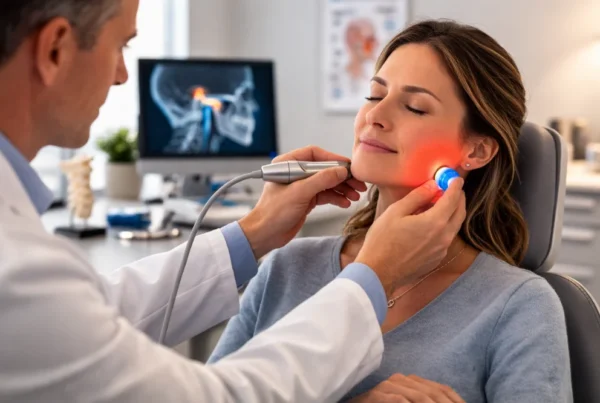

Jaw pain, clicking, or stiffness can make you wonder if the problem will ever truly go away. Many people living with TMJ symptoms ask the same question. Is this something that can be cured, or is it something I will deal with forever? The honest answer is that TMJ disorders exist on a spectrum. Some cases resolve completely once the main trigger is treated, while others become long-term conditions that can still be controlled very successfully.
Dr. Bethaney B. Brenner DMD has helped Burlington, Connecticut patients understand and manage jaw joint conditions since 1980. She graduated from the University of Connecticut School of Dental Medicine and has spent decades studying how jaw joints, teeth, and muscles work together. Her background includes orthodontics, implants, facial pain therapy, and conservative TMJ care. Patients from Town Center, West Burlington, and the Farmington River Valley often visit her office when jaw discomfort begins affecting daily life.
What Do We Mean by “Curing” TMJ?
When patients ask if TMJ is curable, they usually mean something simple. They want to know whether the pain will go away and stay away. In medicine, the word cure can mean different things depending on the condition.
TMJ disorders are not one single disease. They include muscle tension problems, joint disc issues, arthritis, and habit-related strain from clenching or grinding. Because the causes vary, the long-term outcome can vary too. Some patients reach a point where symptoms disappear completely. Others reach a place where the joint feels normal most of the time, with only occasional mild flare-ups.
For many people, the realistic goal is not perfection but normal function. That means eating comfortably, sleeping well, and living without constant jaw pain. When treatment reaches that point, most patients feel their TMJ problem is effectively behind them.
When TMJ Can Resolve Completely
Some TMJ cases improve so much that symptoms disappear entirely. These situations usually involve problems where the main trigger can be corrected or removed. Muscle-based TMJ disorders often fall into this category when they are addressed early.
- Stress-related muscle tension that relaxes with therapy and habit changes
- Teeth grinding that improves with a properly fitted night guard
- Jaw strain from posture habits that improves with physical therapy
- Temporary inflammation from overuse or dental work that settles with rest
These situations tend to respond well to conservative care. Many patients begin noticing improvement within weeks when treatment targets the real trigger. Early evaluation also makes a big difference because the joint and muscles can calm down before long-term changes develop.
When TMJ Becomes a Long-Term Manageable Condition
For some patients, TMJ behaves more like other joint conditions such as knee or shoulder problems. The joint may have structural changes that cannot be completely reversed. This does not mean the situation cannot improve.
| TMJ Cause | Typical Outcome | Treatment Goal |
| Muscle-dominant clenching or grinding | Often resolves or greatly improves | Reduce muscle tension and protect the joint |
| Disc displacement | May stabilize but not fully reverse | Improve function and prevent locking |
| Arthritis in the joint | Usually long-term condition | Control inflammation and maintain movement |
| Old trauma or injury | May remain sensitive | Protect joint and reduce flare-ups |
Many patients with these conditions achieve large improvements in comfort and function. Pain can often decrease significantly once treatment addresses the major stress factors affecting the joint. The focus becomes keeping symptoms stable and preventing flare-ups.
Why Your TMJ Cause and Severity Matter
Understanding the cause of TMJ symptoms is the key to predicting long-term outcomes. Muscle-based TMJ problems generally respond very well to conservative treatment. Stress reduction, splints, and physical therapy often produce strong improvement.
Joint-based conditions, such as disc displacement or arthritis, can be more complex. These conditions may not completely reverse because structural changes exist inside the joint. Even so, targeted care can often stabilize the joint and reduce pain significantly.
Other contributing factors sometimes play a role as well. Airway problems, sleep apnea, or severe grinding habits can keep stressing the joint if they are not addressed. When treatment includes these related factors, patients often experience longer-lasting relief.
What Conservative TMJ Treatment Can Really Achieve
Most TMJ treatment begins with gentle, reversible steps. These approaches aim to calm the muscles and protect the joint without invasive procedures. Many patients are surprised by how effective these simple strategies can be when followed consistently.
- Night guards that reduce pressure from grinding or clenching
- Jaw exercises and physical therapy to relax tight muscles
- Heat therapy and soft diet during flare-ups
- Stress management and habit awareness techniques
Structured treatment programs using these approaches often produce meaningful improvement. Many patients see pain reduction within weeks or months when they follow the plan closely. Consistency matters because stopping treatment too early can allow old habits to bring symptoms back.
Long-Term TMJ Management With a Burlington Dentist
Think of your dentist as a long-term partner in keeping the jaw joint healthy. Once symptoms improve, most patients need only occasional check-ins to keep things stable. During routine visits, the dentist can monitor joint motion, muscle tenderness, and signs of grinding.
Maintenance often includes small adjustments rather than major treatment. Night guards may need periodic adjustments, and patients may review exercises or stress habits that affect the jaw.
Local care makes this process easier. Patients from areas like Wildcat Road, Lost Acres, and the Farmington River Valley appreciate being able to check in with someone who already understands their history. That ongoing relationship helps prevent small problems from becoming bigger ones.
Key Takeaways About TMJ Curability
TMJ disorders are not always something that disappears overnight. However, they are rarely hopeless conditions. Many patients experience major improvement when treatment addresses the underlying causes such as grinding, muscle tension, or posture habits.
Dr. Bethaney B. Brenner DMD helps Burlington patients understand where their condition falls on the TMJ spectrum. Some patients experience complete resolution, while others achieve long-term comfort with simple maintenance care. If you are experiencing jaw pain or clicking, scheduling an evaluation can help clarify what is happening and what steps will improve your outlook.
Frequently Asked Questions
Is TMJ actually curable?
People often ask this because they want to know if jaw pain will completely disappear or if it will keep coming back. The more useful question is whether the underlying cause of the TMJ problem can be addressed. In many patients, especially when the problem is related to muscle tension, stress, or teeth grinding, symptoms can improve dramatically and sometimes disappear once the trigger is treated. In other cases involving arthritis or joint damage, the goal shifts toward long-term control rather than a permanent cure. The good news is that most TMJ patients can reach a point where pain is mild, rare, or no longer affects daily life.
Can TMJ go away on its own?
Some mild TMJ symptoms do settle down without formal treatment, especially when they are caused by temporary muscle strain, stress, or short-term overuse of the jaw. What people should really be asking is whether the habits or triggers causing the strain are still present. If grinding, clenching, poor posture, or stress remain unchanged, the symptoms often return or slowly worsen. When discomfort continues beyond a few weeks, an evaluation helps determine whether the jaw joint, muscles, or bite are contributing to the problem and whether conservative treatment may speed recovery.
Is TMJ curable without surgery?
Most TMJ disorders improve without surgery, which is why conservative treatment is usually recommended first. Patients asking this question are often worried that surgery might be the only solution, but that is rarely the case. Treatments such as night guards, jaw exercises, physical therapy, stress management, and habit changes often reduce symptoms significantly. Surgery is typically considered only when severe structural joint damage or persistent locking does not respond to these conservative approaches.
How long does it take for TMJ symptoms to improve?
The timeline for improvement depends on the underlying cause and how consistently treatment is followed. Many muscle-based TMJ problems begin improving within several weeks once pressure on the joint is reduced and the muscles relax. Structural joint problems may take longer to stabilize, but they can still respond well to careful management. The key question is not only how quickly symptoms improve, but whether the treatment plan addresses the habits and conditions that originally irritated the joint.