Dentist pediatric sleep apnea care can play an important role when a child snores, mouth breathes, or wakes up tired. It does not replace a pediatrician or sleep physician. Instead, it adds another layer of insight by evaluating the mouth, jaw, tongue, and airway. Families in Burlington, CT often start this conversation with Dr. Bethaney B. Brenner DMD when they want clarity and a thoughtful plan.
Dr. Bethaney B. Brenner DMD has cared for patients in Burlington since 1980 and has spent decades teaching dental students while advancing her clinical training. Her background includes orthodontics, facial pain care, laser dentistry, and integrative health counseling. She is an active member of organizations such as the American Dental Association and the Academy of General Dentistry. When pediatric sleep concerns arise, her role is to screen carefully, educate parents clearly, and coordinate next steps with medical providers.
Why parents in Burlington notice sleep problems first
Sleep issues in children often show up quietly at home. Parents may hear loud snoring from the next room in Town Center or notice restless sleep night after night. Others see morning fatigue, mood changes, or mouth breathing during the school day.
These patterns can be confusing because children do not always appear sleepy like adults. Instead, they may seem hyper, irritable, or unfocused. Dentist pediatric sleep apnea screening helps turn these daily observations into useful clinical information. It creates a starting point for understanding what may be happening.
What pediatric sleep apnea can look like at home
Pediatric sleep apnea does not always look dramatic. Some children snore loudly, while others simply breathe through their mouth all night. Night sweats, frequent position changes, or waking up feeling unrested are also common signs.
During the day, children may struggle with attention, emotional regulation, or energy levels. These symptoms often overlap with other concerns, which makes parents unsure where to turn. Dentist pediatric sleep apnea screening helps connect nighttime breathing patterns with daytime behavior in a calm and structured way.
Dentist pediatric sleep apnea screening during a dental visit
A dental exam can reveal airway clues that are easy to miss at home. Dentists may notice a narrow palate, crowded teeth, or a bite that limits tongue space. They may also observe signs of chronic mouth breathing or restricted jaw growth.
At Dr. Bethaney B. Brenner DMD, screening is focused on awareness, not diagnosis. If something appears concerning, families are guided toward medical evaluation with a pediatrician, ENT, or sleep specialist. Dentist pediatric sleep apnea care works best when it supports medical diagnosis and ongoing monitoring.
Signs that may mean it is time to ask about sleep apnea
Parents often ask what signs truly matter. Occasional snoring can be normal, but repeated patterns deserve attention. When symptoms persist for weeks, it is reasonable to ask questions and seek guidance.
Families in West Burlington and East Burlington often report the following concerns. These signs do not confirm a diagnosis, but they do support further evaluation. Dentist pediatric sleep apnea screening often begins with these shared observations.
- Loud snoring most nights or breathing pauses during sleep
- Gasping, choking, or restless sleep
- Mouth breathing or waking with a dry mouth
- Daytime behavior changes such as irritability or difficulty focusing
- Bedwetting that returns after a long dry period
If several of these are present, the next step is documentation, not panic. Writing down what you see helps medical and dental providers work more efficiently together.
Oral appliances and orthodontic support when appropriate
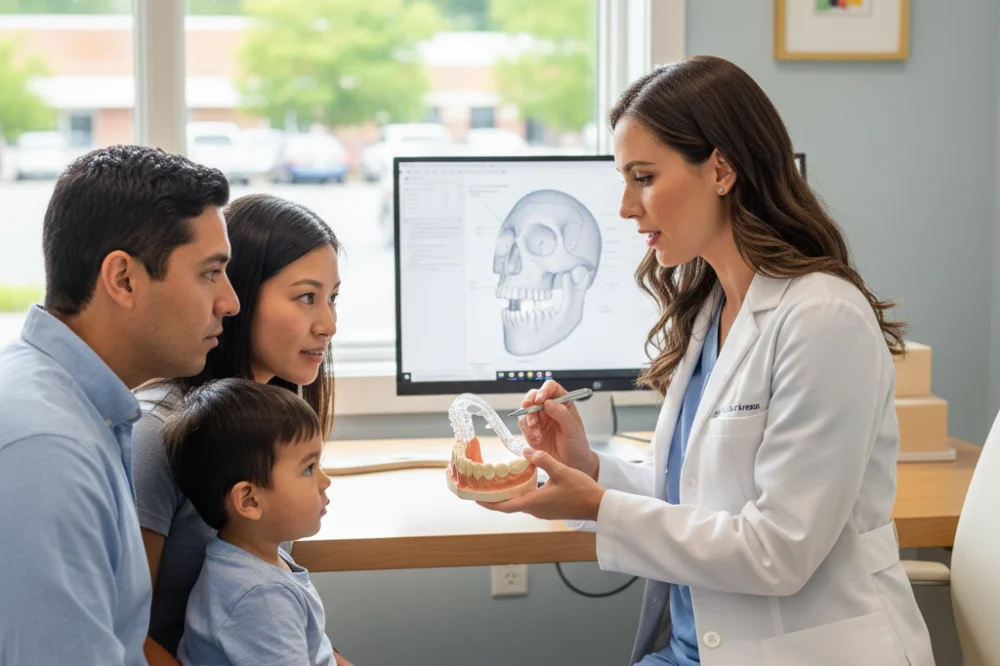
Parents often ask about dental devices as a treatment option. In children, oral appliances are used selectively and always in coordination with medical care. Growth stage, anatomy, and sleep study results all influence whether this approach makes sense.
Dentists with airway training can help identify when orthodontic expansion or growth guidance may support breathing. They can also monitor changes as a child grows. Dentist pediatric sleep apnea care focuses on long term development, not quick fixes.
How dental and medical teams work together
Pediatric sleep apnea requires collaboration. Dentists do not replace sleep studies or medical diagnoses. Instead, they contribute screening, growth monitoring, and oral support when indicated.
This team approach helps families avoid delays and confusion. When each provider understands their role, care becomes more efficient and less stressful. Dentist pediatric sleep apnea care fits into a coordinated plan rather than operating in isolation.
Comparing common pediatric sleep apnea treatment paths
Every child’s treatment plan is unique. Some approaches address physical obstruction, while others support airflow or growth. Understanding these options helps parents feel more confident during decision making.
The table below offers a general overview. It is not a substitute for professional advice, but it clarifies how dentistry may support medical care.
| Treatment Approach | Primary Provider | Typical Use | Dental Support Role |
| Sleep study and diagnosis | Pediatrician or sleep specialist | Confirming OSA | Screening and referral |
| Tonsil and adenoid removal | ENT specialist | Obstructive anatomy | Monitoring growth patterns |
| CPAP or BPAP therapy | Sleep specialist | Moderate to severe cases | Oral comfort and fit awareness |
| Oral appliance therapy | Dentist with sleep training | Selected cases | Fabrication and monitoring |
| Orthodontic expansion | Dentist or orthodontist | Narrow palate or crowding | Growth guidance and follow up |
Parents often want the fastest option, but the best option is one a child can tolerate and sustain. Dentist pediatric sleep apnea care supports stability and comfort over time.
What parents can do before an evaluation
Waiting for appointments can feel overwhelming. There are safe steps parents can take to prepare for evaluations and make visits more productive. These steps do not treat sleep apnea, but they improve clarity.
Tracking sleep patterns and behaviors provides valuable context. Dentist pediatric sleep apnea screening becomes more effective when parents share specific details rather than general concerns.
- Record short sleep videos if safe to do so
- Note bedtime, wake time, and nighttime disturbances
- Track daytime mood, focus, and energy
- List allergies, medications, and health history
- Ask your pediatrician about sleep referrals
These actions help families feel proactive rather than stuck. They also support better collaboration across providers.
Taking the next step with Dr. Bethaney Brenner in Burlington, CT
When a child’s sleep feels off, parents want guidance without pressure. They want clear explanations, thoughtful screening, and a plan that respects their concerns. That is the role Dr. Bethaney B. Brenner DMD and her team aim to play for families throughout Burlington, including areas near George Washington Turnpike and the Farmington River Valley.
The process starts with listening. From there, screening findings are reviewed and referrals are coordinated when needed. Families are supported through each step with clarity and care. To begin the conversation, call (860) 673-7155.
Frequently Asked Questions
Can a dentist diagnose pediatric sleep apnea?
Dentists do not diagnose pediatric sleep apnea. A medical diagnosis is made by a physician, usually with the help of a sleep study. Dentists play an important role by noticing airway-related signs during exams and guiding families toward the right medical evaluation.
Can oral appliances help children with sleep apnea?
Oral appliances may help some children, but they are not appropriate for every case. Decisions are made carefully and usually involve both dental and medical providers. A child’s age, anatomy, growth stage, and diagnosis all factor into whether a dental device is considered.
Should I see an ENT if my child snores?
Ongoing or loud snoring is often a reason to consider an ENT evaluation. Enlarged tonsils and adenoids are common contributors to airway obstruction in children. An early evaluation helps determine whether snoring is simply a phase or a sign of a deeper issue.
What are common signs of pediatric sleep apnea?
Common signs include frequent snoring, pauses in breathing, restless sleep, mouth breathing, and changes in daytime behavior. These patterns are most meaningful when they happen repeatedly over time. Sharing clear observations with your child’s providers helps guide appropriate next steps.