
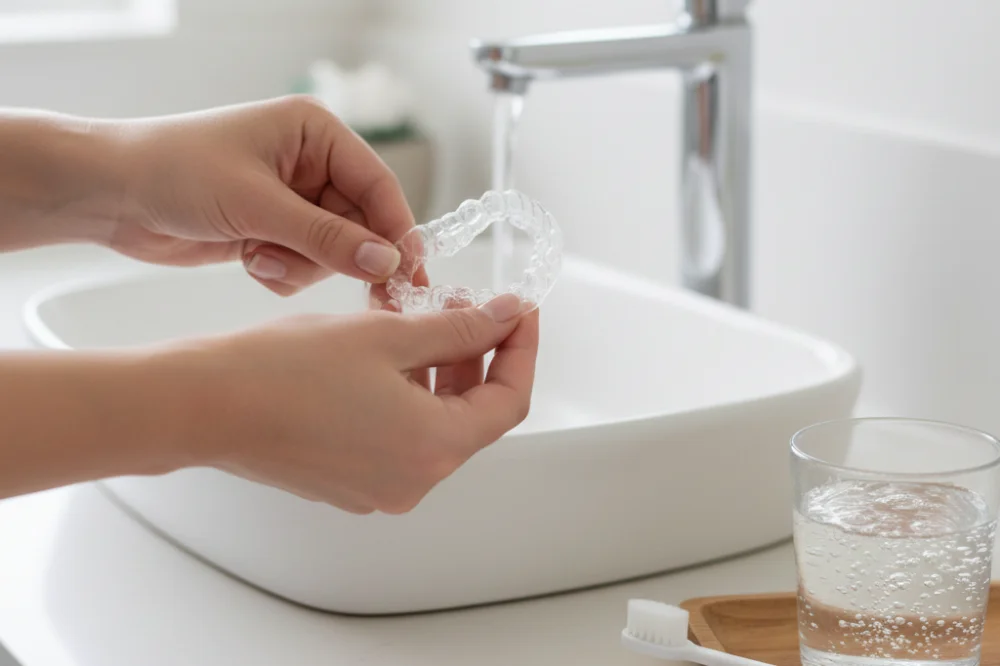
Invisalign aligners only stay clear and invisible if you clean and care for them the right way every single day. Many Burlington patients start treatment excited about removable aligners, but quickly realize that cleaning habits matter more than they expected. Without a simple system, trays can become cloudy, smelly, or uncomfortable.
This guide gives you a complete, dentist-approved care routine that fits real life. You will learn what to use, what to avoid, how often to clean, and how to store aligners safely. Everything here reflects how Invisalign care is coached by Dr. Bethaney B. Brenner at The Burlington Dentist, with routines that work for busy Burlington schedules.
Invisalign Care Basics, Why Cleaning Matters
Clean aligners are not just about appearance, they directly affect oral health and treatment success. Invisalign trays sit tightly against teeth for 20 to 22 hours each day, which means anything on the trays stays pressed against enamel and gums. Plaque and bacteria build up faster in this environment if cleaning is inconsistent.
Cloudy trays, bad breath, and irritated gums often come from skipping basic care steps. When aligners look or smell unpleasant, many patients start wearing them less, which slows tooth movement. Good cleaning habits support comfort, confidence, and steady progress.
Aligner care works best when it is treated as part of brushing and flossing, not as an extra chore. Burlington patients who spend a few focused minutes morning and night on tray care usually avoid staining and odor. Those minutes protect both your teeth and your treatment timeline.
Your Daily Cleaning Routine, Rinse, Brush, Repeat
A few seconds each time you remove your trays prevents buildup from drying onto the plastic. Aligners should always be rinsed with cool or lukewarm water as soon as they come out, even if you plan to put them back in shortly. This habit keeps saliva and plaque from hardening and becoming much harder to remove later.
At least twice each day, gently brush aligners using a soft-bristled toothbrush and a clear, fragrance-free soap or approved cleaner. Regular toothpaste should be avoided because it is abrasive and scratches the surface, which makes trays look cloudy and allows bacteria to cling more easily. Your teeth also need attention before aligners go back in, so brushing and flossing first helps prevent cavities and keeps aligners smelling fresh.
The Daily Steps That Keep Trays Clear
Daily habits are the foundation of clean, comfortable aligners during Invisalign treatment. Small steps done consistently prevent buildup, odor, and staining before they start. When these habits become routine, aligner care feels automatic instead of stressful or time-consuming.
- Rinse aligners every time you remove them so saliva and plaque do not dry on the surface
- Brush aligners gently morning and night using a soft toothbrush and clear soap or an approved cleaner
- Brush and floss your teeth before reinserting aligners to avoid trapping food and bacteria
These steps only take a few minutes, but they have a big impact over time. Patients who skip them often notice haze, odor, or discomfort within days. Staying consistent with these habits prevents most common aligner problems and helps keep trays clear throughout treatment.
Deep Cleaning Options, Soaks and Advanced Tools
Quick brushing handles daily buildup, but regular soaking keeps aligners fresh over time. Many Burlington patients benefit from soaking aligners daily or a few times per week using Invisalign Cleaning Crystals or retainer tablets. Short soaks help remove residue that brushing alone cannot reach.
Some dentists also support diluted hydrogen peroxide mixed with cool water for brief soaks. This method can help with staining when used carefully and rinsed thoroughly afterward. Ultrasonic cleaners designed for aligners may provide deeper cleaning when paired with safe solutions.
Product instructions matter, and not all cleaners are equal. Trying new products without guidance can damage trays. When used correctly, deep-cleaning methods extend clarity through each aligner stage.
What NOT to Use, Avoiding Damage and Discoloration
The wrong cleaning method can permanently damage clear aligners and affect how they fit. Hot water should never be used because heat can warp the plastic and change tray shape. Abrasive toothpastes are also a problem because they scratch the surface and make staining more noticeable over time.
Colored mouthwashes, bleach, strong vinegar, and other harsh chemicals can discolor or weaken aligners. Dishwashers and boiling water are especially damaging and should never be used under any circumstances. Safe cleaning is simple and gentle, using lukewarm water, clear mild soap, approved tablets, or short diluted peroxide soaks when advised, and when unsure it is always better to ask than to experiment.
Use This and Avoid That for Aligner Cleaning
This table summarizes common products and habits patients ask about most often. It provides quick clarity when you are unsure what is safe. Keeping these guidelines in mind protects trays every day.
| Category | Use This | Avoid This |
| Water temperature | Cool or lukewarm water | Hot or boiling water |
| Daily cleaner | Clear mild soap or approved cleaner | Regular toothpaste |
| Soaking products | Cleaning crystals or retainer tablets | Bleach or strong vinegar |
| Mouth rinses | Clear, non-colored if advised | Colored or alcohol-based |
Following these guidelines preserves aligner shape and clarity. It also reduces odor and irritation. Most cleaning problems trace back to using products from the avoid column.
Storage, Travel, and Everyday Care Habits
Clean aligners still need safe storage and careful handling throughout the day. Trays should always be placed in their hard case when they are not in your mouth, even for short breaks. Napkins, loose pockets, and tabletops are common reasons aligners get lost, cracked, or accidentally thrown away.
Aligners should also be kept away from pets and heat sources at all times. Dogs often chew trays, and car dashboards or heaters can warp them quickly. When traveling, a small Invisalign kit with a case, travel toothbrush, floss, and cleaner makes clean reinsertion possible anywhere, and many Burlington patients keep an extra case at work or school for added protection.
Troubleshooting Cloudy, Yellow, or Smelly Aligners
When aligners look cloudy, yellow, or start to smell, it usually means something in the cleaning routine needs adjustment. These issues are common and often fixable when addressed early. Understanding the likely cause helps you correct the problem before it affects comfort or wear time.
- Cloudy aligners are often caused by dried plaque or micro-scratches, and gentle brushing paired with regular soaking usually improves clarity within a few days
- Yellow or brown stains often come from coffee, tea, smoking, or colored foods, and while more frequent soaking may help, heavily stained trays may need replacement
- Persistent odor usually signals trapped bacteria from incomplete cleaning or reinserting trays without brushing teeth first
If appearance or smell does not improve after tightening your routine, it is time to call the dentist. Bringing aligners to your appointment allows the dentist to check for warping, surface damage, or hygiene issues you might not notice. Acting early prevents bigger setbacks and helps keep treatment on track.
Local Burlington CT Support, Partnering With Your Invisalign Dentist
You do not have to manage aligner care on your own during Invisalign treatment. Burlington Invisalign providers give clear instructions and recommend products based on your teeth, enamel risk, and daily habits. This guidance is built into treatment and is meant to prevent problems before they start, not react after damage happens.
Regular visits allow dentists to monitor tray fit, clarity, and overall oral health as treatment progresses. If aligners are lost, warped, or damaged, offices can help replace them and adjust the plan quickly. If you are unsure about a cleaner or notice changes in fit or comfort, calling the office early helps protect both your aligners and your treatment timeline.
A Simple Path to Clean, Clear Aligners
Caring for Invisalign aligners means rinsing at every removal, brushing trays gently twice a day, and soaking regularly with safe products. Avoid heat, abrasives, and harsh chemicals at all times. Store trays properly and keep wear time consistent.
At The Burlington Dentist, Dr. Bethaney B. Brenner helps patients build routines that fit real life in Burlington, CT. If your aligners look cloudy, smell bad, or feel off, schedule a visit for personalized guidance. Clean trays support confident wear and steady results.
Frequently Asked Questions
How often should I clean my Invisalign aligners?
Aligners should be rinsed every time they are removed and gently brushed at least twice a day. Many patients also benefit from soaking trays several times per week to control buildup and odor. Consistent habits matter more than using many products.
Can I use toothpaste to clean my aligners?
Regular toothpaste is not recommended because it is abrasive and scratches the plastic. Scratches make aligners look cloudy and allow bacteria to cling more easily. Clear, fragrance-free soap or approved cleaners are safer choices.
Why do my aligners smell even though I brush them?
Odor usually means bacteria are trapped on the trays or teeth before reinsertion. Improving brushing and flossing before putting aligners back in often helps. Regular soaking can also reduce lingering smells.
When should I call my dentist about my aligners?
Call if aligners stay cloudy, stained, warped, or smelly despite proper cleaning. Changes in fit or comfort also deserve evaluation. Early help prevents delays and replacements.